

Hey there! As a pin header supplier, I often get asked about the maximum current a pin header can carry. It's a crucial question, especially for those working on electrical and electronic projects. So, let's dive right into it.
First off, what exactly is a pin header? Well, it's a type of electrical connector that consists of a number of pins arranged in a row or rows. These pins are usually made of metal, like brass or phosphor bronze, and are used to connect different components on a printed circuit board (PCB). They come in various shapes, sizes, and configurations, such as single - row, double - row, right - angle, and surface - mount (SMD) types.
The maximum current a pin header can carry depends on several factors. One of the most important factors is the cross - sectional area of the pin. You see, a larger cross - sectional area allows for more electrons to flow through the pin, which means it can carry a higher current. Think of it like a water pipe. A wider pipe can carry more water than a narrow one. Similarly, a pin with a larger cross - section can carry more electrical current.
Another factor is the material of the pin. Different metals have different electrical conductivities. For example, copper is a great conductor of electricity, and pins made of copper alloys can carry relatively high currents. On the other hand, some cheaper metals may have lower conductivity, which limits the amount of current they can handle.
The temperature also plays a big role. When current flows through a pin, it generates heat due to the resistance of the metal. If the current is too high, the heat can build up to a point where it damages the pin or the surrounding components. So, the maximum current rating is often specified with a certain temperature rise in mind. Usually, manufacturers will state the maximum current the pin can carry while keeping the temperature rise within a safe limit, say 30 - 50 degrees Celsius above the ambient temperature.
The length of the pin can also affect the current - carrying capacity. A longer pin has more resistance compared to a shorter one. This increased resistance can cause more heat to be generated at the same current level. So, in general, shorter pins can carry more current than longer ones.

Now, let's talk about some specific products. We offer a 1.5mm Wafer Single Row Right Angle SMD. This type of pin header is designed for surface - mount applications. The 1.5mm spacing between the pins is a common standard, which allows for a good balance between compactness and current - carrying capacity. For this particular product, depending on the pin material and the PCB layout, it can typically carry a current of around 1 - 2 amps. But this can vary based on the factors we discussed earlier.
Our AMPSEAL Terminal is another great option, especially for automotive applications. These terminals are designed to be durable and reliable in harsh environments. They are made of high - quality materials that can handle relatively high currents. In some cases, they can carry currents of up to 5 - 10 amps, but again, it depends on the specific design and the operating conditions.
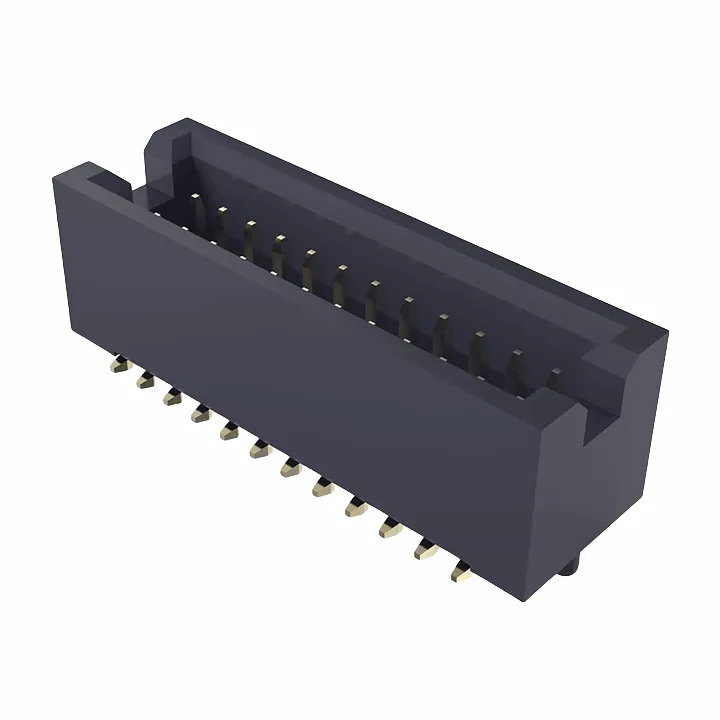
Then there's the 1.27mm Box Header Double Row SMT Stacker. This is a more compact option with a 1.27mm pitch. Due to its smaller size, the current - carrying capacity is usually a bit lower compared to larger - pitch headers. It can typically handle currents in the range of 0.5 - 1.5 amps.
It's important to note that these are just rough estimates. When you're designing a circuit, you need to consider all the factors carefully. You should also check the datasheets provided by the manufacturer. The datasheets will give you the exact specifications for the maximum current, temperature rise, and other important parameters.
If you're not sure which pin header is right for your project, don't hesitate to reach out to us. We have a team of experts who can help you select the best product based on your specific requirements. Whether you need a high - current pin header for a power - hungry application or a small - sized one for a compact design, we've got you covered.
We understand that every project is unique, and that's why we offer a wide range of pin headers with different specifications. We can also customize products according to your needs. So, if you have a special design in mind, just let us know, and we'll work with you to make it happen.
When it comes to quality, we don't compromise. We use the best materials and the latest manufacturing techniques to ensure that our pin headers are reliable and long - lasting. Our products go through strict quality control processes to meet the highest industry standards.
In conclusion, the maximum current a pin header can carry is determined by multiple factors, including the cross - sectional area of the pin, the material, the temperature, and the length. By understanding these factors, you can make an informed decision when choosing a pin header for your project. And if you need any help or have any questions, we're here for you. Just contact us, and we'll start the conversation about how we can meet your pin header needs.
References
- Electrical Engineering textbooks on circuit design and connectors
- Manufacturer datasheets for pin headers and related components