

Hey there! As a box header supplier, I often get asked about the load - bearing capacity of box headers. It's a crucial aspect, especially for those who rely on these components in their electronic projects or industrial applications. So, let's dive right in and explore what the load - bearing capacity of a box header really is.
Understanding Box Headers
First off, for those who might not be super familiar, box headers are essential connectors in the electronics world. They're used to establish electrical connections between different parts of a circuit board. You've got various types, like single - row and double - row headers, right - angle and straight ones, and different mounting styles such as through - hole (DIP) and surface - mount (SMT).
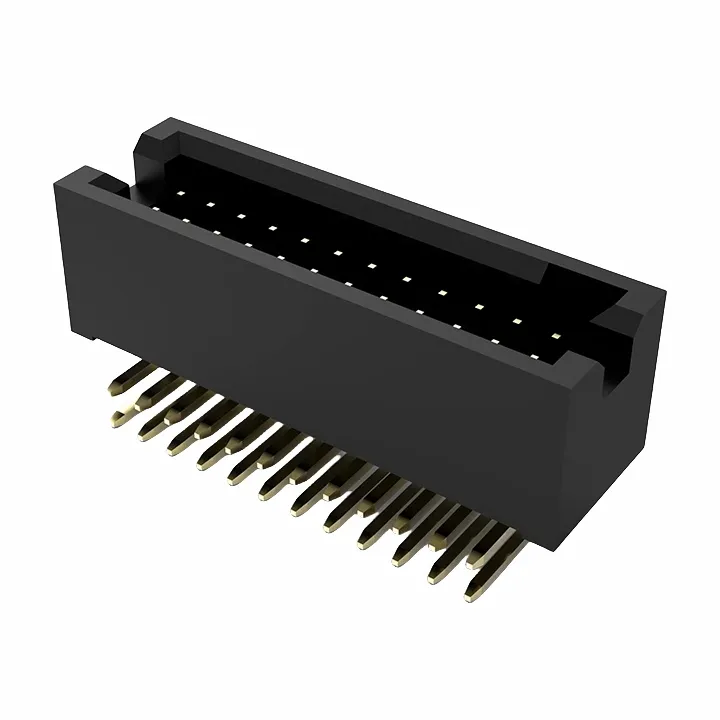
For example, we've got the 1.27mm Box Header Male Double Row Right Angle DIP2. This one's a double - row, right - angle header with a 1.27mm pitch, and it's designed for through - hole mounting. Then there's the 1.27mm Box Header Double Row SMT, which is a surface - mount option, great for more compact circuit board designs. And the 1.27mm Box Header Male Double Row Straight Stacker, as the name suggests, is a straight, double - row male header that can be stacked.
What is Load - Bearing Capacity?
The load - bearing capacity of a box header refers to the maximum amount of stress, force, or electrical load that the header can handle without failing. This can be broken down into mechanical and electrical load - bearing capacities.
Mechanical Load - Bearing Capacity
Mechanically, a box header needs to withstand physical forces like pulling, pushing, and bending. When you're inserting or removing a mating connector, there's a certain amount of force involved. If the header can't handle this force, the pins can bend or break, which will mess up the electrical connection.
The mechanical load - bearing capacity depends on a few factors. The material of the pins is a big one. Most box headers have pins made of metals like brass or phosphor - bronze. Brass is relatively soft but has good electrical conductivity, while phosphor - bronze is stronger and more resistant to wear and tear.
The design of the header also matters. Headers with thicker pins can generally handle more mechanical stress. For example, a double - row header might have better mechanical stability than a single - row one because the additional row provides more support.
The way the header is mounted on the circuit board affects its mechanical strength too. Through - hole headers are usually more robust because the pins are inserted through holes in the board and soldered on the other side. Surface - mount headers, while more compact, can be a bit more fragile as they rely on solder joints on the surface of the board.
Electrical Load - Bearing Capacity
Electrical load - bearing capacity is all about how much current and voltage the header can handle without overheating or short - circuiting. This is determined by the cross - sectional area of the pins and the material's conductivity.
A larger cross - sectional area of the pins allows for more current to flow through without causing excessive resistance. Resistance generates heat, and if the header can't dissipate this heat properly, it can lead to damage.
The voltage rating is also important. If the voltage applied across the header exceeds its rating, it can cause arcing between the pins, which is not only dangerous but can also damage the header and the connected components.
Determining the Load - Bearing Capacity
So, how do you figure out the load - bearing capacity of a specific box header? Well, most manufacturers provide datasheets for their products. These datasheets are a goldmine of information. They'll tell you things like the maximum current rating, voltage rating, and sometimes even the mechanical stress limits.
When you're designing a circuit, it's crucial to choose a box header with a load - bearing capacity that matches your requirements. For example, if you're working on a high - power circuit that requires a lot of current, you'll need a header with a high - current rating.
Let's say you're building a power supply unit. You'll want to make sure the box headers you use can handle the full load of the power supply. Otherwise, you might end up with overheating, which can lead to component failure and even fires in extreme cases.
Application - Specific Considerations
Different applications have different demands when it comes to the load - bearing capacity of box headers.
Consumer Electronics
In consumer electronics like smartphones and tablets, space is a premium. So, surface - mount headers are often used. These headers need to be able to handle the electrical loads required by the device's internal components while being small and lightweight. The mechanical stress in these applications is usually not too high, as the connectors are not frequently removed.
Industrial Equipment
Industrial applications, on the other hand, are a whole different ballgame. Industrial equipment often operates under harsh conditions, with high levels of vibration, shock, and temperature variations. The box headers used in these applications need to have a high mechanical load - bearing capacity to withstand the physical stresses.
For example, in a manufacturing plant, a machine might be constantly moving and vibrating. The box headers connecting different control boards must be able to handle these vibrations without coming loose or getting damaged.

Automotive Applications
In automotive electronics, box headers need to meet strict standards. They have to handle a wide range of temperatures, from the cold of winter to the heat of summer. The electrical load - bearing capacity is also important, as the automotive electrical system can supply significant amounts of current to power various components like lights, sensors, and entertainment systems.
Making the Right Choice
As a box header supplier, I always tell my customers to do their homework. Before choosing a box header, understand the specific requirements of your application. Look at the electrical and mechanical demands and match them with the load - bearing capacity of the headers.
If you're not sure, don't hesitate to reach out. We're here to help you make the right choice. Whether you need a high - current header for a power - hungry application or a compact surface - mount header for a space - constrained design, we've got you covered.
Let's Talk Business
Are you in the market for box headers? Do you have questions about load - bearing capacity or need help choosing the right product for your project? We're just a message away. Let's start a conversation and see how we can work together to meet your needs. Whether you're a small - scale hobbyist or a large - scale industrial manufacturer, we're committed to providing you with high - quality box headers at competitive prices.
References
- General knowledge of electronics and electrical engineering principles
- Datasheets from various box header manufacturers