

Hey there! As a supplier of automotive crimp terminals, I've seen firsthand the confusion that can arise between insulated and non - insulated terminals. So, let's dive right in and break down the differences.
What are Automotive Crimp Terminals?
Before we get into the insulated vs. non - insulated debate, let me quickly explain what automotive crimp terminals are. They're basically connectors that are used to terminate the ends of wires in automotive electrical systems. You crimp them onto the wire, and they create a secure electrical connection. This is super important in cars because a good connection ensures that all the electrical components, like your lights, radio, and engine sensors, work properly.

Non - Insulated Automotive Crimp Terminals
Let's start with non - insulated terminals. These are fairly straightforward. They're usually made of metal, like copper or brass, and they don't have any kind of protective covering.
Advantages
- Cost - effective: One of the biggest perks of non - insulated terminals is that they're cheaper. Since there's no insulation material, the manufacturing process is simpler, and that translates to a lower price tag. If you're on a tight budget or working on a project where you need a large number of terminals, non - insulated ones can save you some serious cash.
- Better for Low - Voltage Applications: In low - voltage automotive systems, like some interior lighting circuits, non - insulated terminals work just fine. The absence of insulation doesn't pose a risk of electrical short circuits because the voltage is low enough. They can conduct electricity efficiently without any added bulk.
- Easy to See the Connection: Without insulation, it's easy to visually inspect the crimped connection. You can quickly tell if the wire is properly seated in the terminal and if the crimp is tight. This can be really helpful during troubleshooting or quality control checks.
Disadvantages
- Risk of Short Circuits: The main drawback of non - insulated terminals is the risk of short circuits. If the exposed metal comes into contact with other conductive materials, it can cause a short, which can damage electrical components or even start a fire. This is a major concern in areas where wires are close together or in high - vibration environments.
- Corrosion: Since the metal is exposed, non - insulated terminals are more prone to corrosion. Moisture, dirt, and chemicals can all cause the metal to rust or corrode over time. This can degrade the electrical connection and lead to performance issues.
Insulated Automotive Crimp Terminals
Now, let's talk about insulated terminals. These terminals have a layer of insulation, usually made of plastic or rubber, covering the metal part.
Advantages
- Electrical Safety: Insulation provides a protective barrier that reduces the risk of short circuits. It prevents the exposed metal from coming into contact with other conductive materials, making them much safer to use in complex automotive electrical systems. This is especially important in high - voltage applications, like the engine's ignition system.
- Corrosion Resistance: The insulation acts as a shield against moisture, dirt, and chemicals. This helps to protect the metal terminal from corrosion, extending its lifespan and ensuring a reliable electrical connection over time.
- Color - Coding: Many insulated terminals come in different colors. This can be really useful for wiring harnesses because it allows you to easily identify different circuits. For example, you might use red for power wires and black for ground wires.
Disadvantages
- Higher Cost: As I mentioned earlier, the insulation adds to the manufacturing cost. So, insulated terminals are generally more expensive than non - insulated ones. If cost is a major factor, this might be a deal - breaker.
- Difficult to Inspect: The insulation can make it harder to visually inspect the crimped connection. You might need to use special tools or techniques to check if the wire is properly seated and the crimp is tight.
When to Use Each Type
So, when should you use non - insulated terminals, and when should you go for insulated ones?
Non - Insulated Terminals
- Simple DIY Projects: If you're working on a simple automotive DIY project, like adding a new accessory light, and you're on a budget, non - insulated terminals can be a great choice. Just make sure you take extra precautions to avoid short circuits.
- Low - Risk Environments: In areas of the car where the risk of short circuits is low, such as the trunk or under the dashboard, non - insulated terminals can be used.
Insulated Terminals
- High - Voltage Systems: For high - voltage applications, like the starter motor or the alternator, insulated terminals are a must. The added safety provided by the insulation is crucial to prevent electrical accidents.
- Complex Wiring Harnesses: In modern cars, wiring harnesses can be extremely complex. Insulated terminals with color - coding can make the installation and maintenance of these harnesses much easier.
Our Product Range
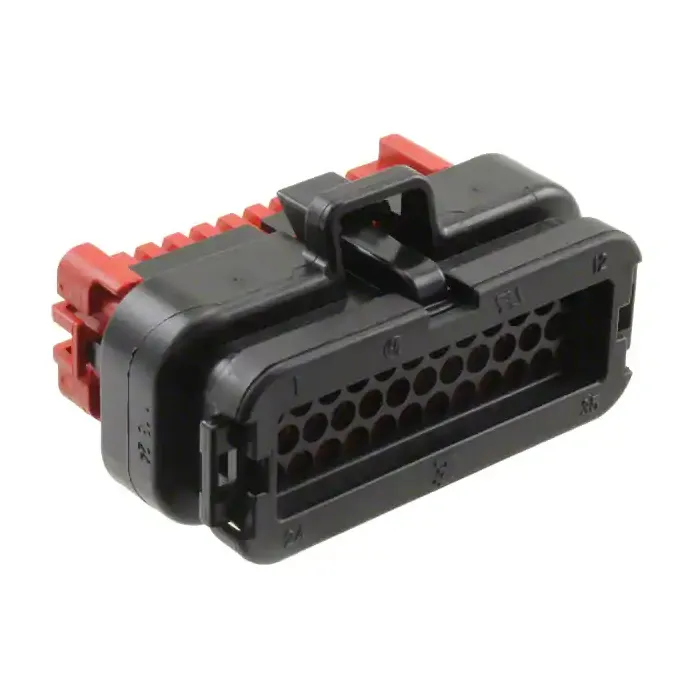
As a supplier, we offer a wide range of both insulated and non - insulated automotive crimp terminals. We also have some great products in our AMPSEAL series. Check out our AMPSEAL 14pin 4.0mm Pitch Housing Wire Type and AMPSEAL 23pin 4.0mm Pitch Header Vertical. These connectors are designed to provide a reliable electrical connection in automotive applications. And if you're looking for AMPSEAL terminals specifically, head over to our AMPSEAL Terminal page.
Conclusion
In conclusion, the choice between insulated and non - insulated automotive crimp terminals depends on several factors, including cost, safety, and the specific application. Non - insulated terminals are great for budget - conscious projects and low - risk environments, while insulated terminals offer better safety and durability, especially in high - voltage and complex systems.
If you're in the market for automotive crimp terminals, whether it's for a small DIY project or a large - scale automotive manufacturing operation, we're here to help. We can provide you with high - quality terminals at competitive prices. Don't hesitate to reach out to us for more information or to discuss your specific needs. We're always happy to have a chat and help you find the right terminals for your project.
References
- "Automotive Electrical Systems Handbook"
- Various industry whitepapers on automotive connectors and terminals