

As a seasoned supplier of MDR connectors, I've encountered numerous inquiries regarding the contact resistance of these essential components. In this blog post, I'll delve into the concept of contact resistance in MDR connectors, exploring its significance, influencing factors, and practical implications.
Understanding Contact Resistance
Contact resistance refers to the resistance encountered at the interface between two conductive materials in contact. In the context of MDR connectors, it occurs at the points where the pins of the connector make contact with the corresponding sockets or traces on a circuit board. This resistance can have a significant impact on the performance of the electrical connection, affecting factors such as signal integrity, power transmission efficiency, and overall system reliability.
The contact resistance of MDR connectors is typically measured in milliohms (mΩ). A lower contact resistance is generally desirable, as it indicates a more efficient electrical connection with less power loss and signal degradation. However, achieving and maintaining low contact resistance can be challenging due to various factors that can influence the contact interface.
Factors Influencing Contact Resistance
Several factors can affect the contact resistance of MDR connectors, including:
Surface Finish
The surface finish of the connector pins and sockets plays a crucial role in determining contact resistance. Common surface finishes include gold, tin, and nickel. Gold is often preferred due to its excellent conductivity, corrosion resistance, and ability to maintain a stable contact interface over time. Tin is a more cost-effective alternative but may be more prone to oxidation and corrosion, which can increase contact resistance. Nickel is sometimes used as an undercoat for other finishes to improve adhesion and corrosion resistance.
Contact Force
The contact force between the pins and sockets is another important factor. Adequate contact force ensures a reliable electrical connection by minimizing the contact resistance. Insufficient contact force can result in a loose connection, leading to increased resistance and potential signal loss. On the other hand, excessive contact force can cause damage to the connector pins or sockets, also affecting the contact resistance.
Contact Area
The size of the contact area between the pins and sockets also influences contact resistance. A larger contact area generally results in lower resistance, as it provides more surface area for the flow of electrical current. Designers often optimize the shape and dimensions of the connector pins and sockets to maximize the contact area while maintaining mechanical stability.
Environmental Conditions
Environmental factors such as temperature, humidity, and vibration can also impact contact resistance. High temperatures can cause thermal expansion and contraction of the connector materials, leading to changes in the contact interface and potentially increasing resistance. Humidity can promote corrosion and oxidation, which can degrade the surface finish and increase contact resistance. Vibration can cause mechanical wear and loosening of the connection, also affecting the contact resistance.
Measuring Contact Resistance
Accurately measuring the contact resistance of MDR connectors is essential for ensuring their performance and reliability. There are several methods for measuring contact resistance, including:
Four-Point Probe Method
The four-point probe method is a commonly used technique for measuring low resistance values. In this method, four probes are used to apply a known current through the contact interface and measure the voltage drop across it. The contact resistance can then be calculated using Ohm's law (R = V/I). This method is highly accurate and can measure resistance values in the milliohm range.
Two-Point Probe Method
The two-point probe method is a simpler and less accurate technique for measuring contact resistance. In this method, two probes are used to apply a current through the contact interface and measure the voltage drop across it. However, this method also includes the resistance of the probes and the leads, which can introduce errors in the measurement.
Micro-Ohmmeter
A micro-ohmmeter is a specialized instrument designed for measuring low resistance values. It uses a high-precision current source and a sensitive voltmeter to measure the contact resistance directly. Micro-ohmmeters are often used in quality control and testing applications to ensure the compliance of MDR connectors with specified resistance values.
Practical Implications of Contact Resistance
The contact resistance of MDR connectors can have several practical implications for electrical systems, including:
Signal Integrity
High contact resistance can cause signal degradation, leading to errors and data loss in digital communication systems. In analog systems, it can introduce noise and distortion, affecting the accuracy and quality of the signal. To ensure reliable signal transmission, it is important to minimize contact resistance and maintain a stable contact interface.

Power Transmission Efficiency
Contact resistance also affects the efficiency of power transmission in electrical systems. Higher resistance results in greater power loss in the form of heat, which can reduce the overall efficiency of the system and increase energy consumption. By minimizing contact resistance, power losses can be reduced, leading to improved energy efficiency and cost savings.
System Reliability
Unstable or high contact resistance can cause intermittent electrical connections, leading to system failures and downtime. In critical applications such as aerospace, automotive, and medical devices, reliable electrical connections are essential for ensuring the safety and performance of the system. By maintaining low and stable contact resistance, the reliability of the system can be improved.
Our MDR Connector Solutions
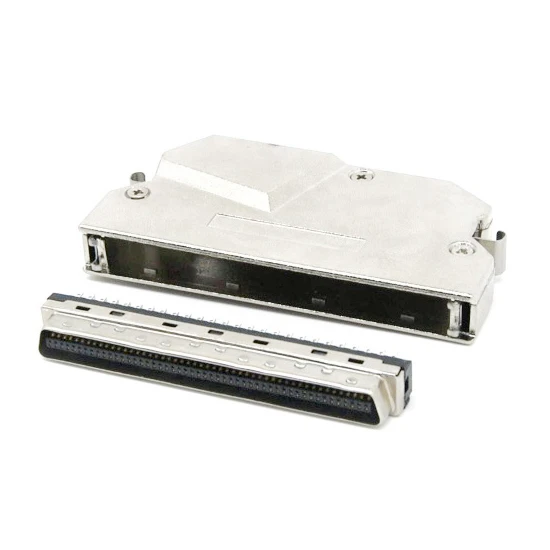
As a leading supplier of MDR connectors, we offer a wide range of high-quality products designed to meet the diverse needs of our customers. Our connectors are available in various configurations, including the MDR 68pin Connector, MDR 68pin Male Connector With Metal Shell, and MDR 68pin Male Connector.
We use advanced manufacturing techniques and high-quality materials to ensure the low contact resistance and reliable performance of our connectors. Our connectors are also designed to withstand harsh environmental conditions, making them suitable for a wide range of applications.
Conclusion
Contact resistance is a critical parameter in the performance and reliability of MDR connectors. Understanding the factors that influence contact resistance and implementing appropriate measures to minimize it is essential for ensuring the optimal performance of electrical systems. As a trusted supplier of MDR connectors, we are committed to providing our customers with high-quality products that meet the highest standards of performance and reliability.
If you have any questions or need further information about our MDR connectors, please feel free to contact us. We look forward to discussing your specific requirements and providing you with the best solutions for your applications.
References
- "Connectors: Theory and Practice" by Ronald B. Standley
- "Electrical Contacts: Principles and Applications" by E. A. Brandes
- "Handbook of Electrical Contacts" by K. S. Gandhi