

Hey there! As a box header supplier, I've been in the game for quite a while, and I know how crucial it is to understand the quality standards for these little but mighty components. So, let's dive right in and talk about what makes a top - notch box header.
Material Quality
First off, the materials used in box headers are super important. The conductors, usually made of metals like brass or phosphor bronze, need to have excellent electrical conductivity. Brass is a popular choice because it's relatively inexpensive and has decent conductivity. But phosphor bronze is even better in some ways. It has higher mechanical strength and better resistance to corrosion, which means a longer lifespan for the box header.
The insulator material is also key. Most of the time, we use plastics like polyamide (nylon) or liquid crystal polymer (LCP). Nylon is cost - effective and has good insulation properties. It can withstand a certain amount of heat and mechanical stress. On the other hand, LCP is a high - performance plastic. It has excellent dimensional stability, which is crucial for maintaining the proper spacing between the pins of the box header. This stability ensures reliable electrical connections.
Dimensional Accuracy
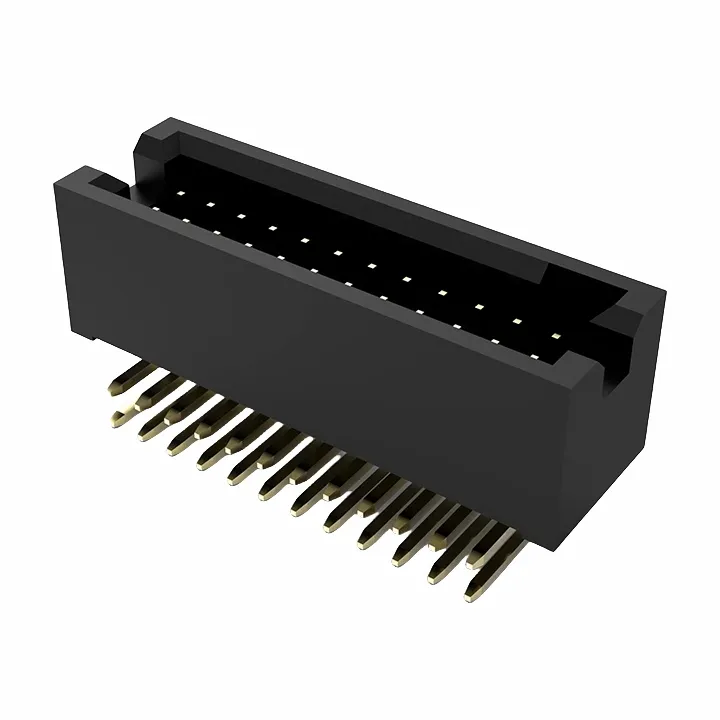
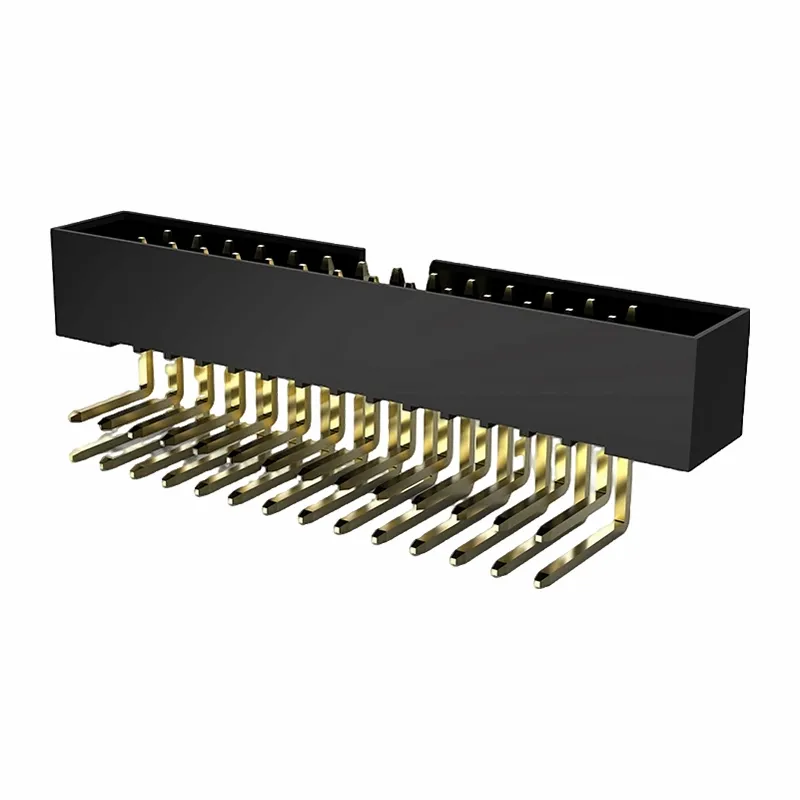
Dimensional accuracy is another major quality standard. The pitch, which is the distance between the centers of adjacent pins, needs to be precise. For example, in a 1.27mm Box Header Double Row Right Angle DIP, the 1.27mm pitch must be maintained within very tight tolerances. Even a small deviation can lead to problems when mating the box header with other components.
The length and width of the box header also matter. The overall size should match the design requirements of the printed circuit board (PCB) it's going to be used on. If it's too big, it might not fit properly on the PCB, and if it's too small, it could cause issues with the mechanical and electrical connections.
Pin Quality
The pins of a box header are its most critical part. They need to be straight and free from any bends or deformities. A bent pin can prevent proper mating with a socket or another connector, leading to intermittent or no electrical connection at all.
The surface finish of the pins is also important. Gold plating is often used because it has excellent corrosion resistance and low contact resistance. However, it can be expensive. Tin plating is a more cost - effective alternative. It provides good solderability, which is essential for attaching the box header to the PCB.
Electrical Performance
When it comes to electrical performance, there are several key factors. The contact resistance between the pins should be as low as possible. Low contact resistance ensures efficient power transfer and reduces the generation of heat. A high contact resistance can lead to power losses and potential overheating, which can damage the box header and other components in the circuit.
The insulation resistance between the pins needs to be high. This prevents electrical leakage between adjacent pins, which could cause short - circuits or other electrical malfunctions.
The voltage rating of the box header is also a crucial quality parameter. It indicates the maximum voltage that the box header can safely handle without breaking down. Using a box header with a voltage rating lower than the actual circuit voltage can be extremely dangerous and can lead to component failure.
Mechanical Durability
Box headers need to be mechanically durable. They should be able to withstand the normal handling and mating processes without getting damaged. The housing of the box header should be strong enough to protect the pins from physical impacts.
The retention force of the pins is also important. It refers to how well the pins stay in place within the housing. A good retention force ensures that the pins won't come loose during use, which could cause electrical problems.
Compatibility
Compatibility is a big deal. Box headers need to be compatible with the mating connectors and the PCB they are used on. For example, a 1.27mm Box Header Male Double Row Right Angle DIP2 should be able to mate properly with a corresponding female socket. The pin configuration, pitch, and overall size need to match exactly.
They also need to be compatible with the soldering process used in PCB assembly. Whether it's through - hole soldering or surface - mount technology (SMT), the box header should be designed to work well with the chosen method. For instance, a 1.27mm Box Header Double Row SMT Stacker is specifically designed for SMT assembly, with features that make it easy to place and solder on the PCB.
Testing and Certification
To ensure that our box headers meet these quality standards, we conduct a series of tests. Electrical tests are done to measure the contact resistance, insulation resistance, and voltage rating. Mechanical tests are performed to check the pin straightness, retention force, and the overall durability of the housing.
We also aim to get relevant certifications. Certifications like ISO 9001 ensure that our manufacturing processes are of high quality and that we have a proper quality management system in place.
Why Choose Our Box Headers?
At our company, we take quality seriously. We source the best materials, use state - of - the - art manufacturing processes, and conduct rigorous testing to ensure that our box headers meet or exceed the industry standards. Whether you need a box header for a simple consumer electronics product or a high - end industrial application, we've got you covered.
If you're in the market for box headers and want to discuss your specific requirements, we'd love to hear from you. We can provide you with samples, technical support, and competitive pricing. Don't hesitate to reach out for a procurement discussion. We're here to help you find the perfect box headers for your project.
References
- "Connectors Handbook", McGraw - Hill
- Industry standards for electrical connectors, various industry associations