

Grounding is a critical aspect in the design and application of high voltage automotive connectors. As a leading supplier of high voltage automotive connectors, we understand the importance of proper grounding requirements to ensure the safety, reliability, and performance of automotive electrical systems. In this blog post, we will explore the key grounding requirements for high voltage automotive connectors and their significance in the automotive industry.
The Importance of Grounding in High Voltage Automotive Systems
High voltage automotive systems, such as those found in electric and hybrid vehicles, operate at significantly higher voltages compared to traditional automotive electrical systems. These high voltages pose unique challenges in terms of electrical safety, electromagnetic interference (EMI), and system reliability. Grounding plays a crucial role in addressing these challenges by providing a low - resistance path for electrical current to flow safely to the ground.
One of the primary functions of grounding in high voltage automotive systems is to protect against electrical shock. In the event of a fault, such as a short - circuit, proper grounding ensures that the excess current is diverted safely to the ground, preventing potential harm to passengers and maintenance personnel. Additionally, grounding helps to reduce EMI, which can interfere with the operation of sensitive electronic components in the vehicle. By providing a stable reference potential, grounding minimizes the electromagnetic fields generated by high voltage circuits, improving the overall electromagnetic compatibility (EMC) of the vehicle.
Grounding Requirements for High Voltage Automotive Connectors
Electrical Conductivity
High voltage automotive connectors must have excellent electrical conductivity to ensure efficient grounding. The connector materials should have low resistivity to minimize power losses and voltage drops during the flow of electrical current. Copper and its alloys are commonly used in high voltage connectors due to their high electrical conductivity. The contact surfaces of the connectors should also be properly plated to prevent oxidation and corrosion, which can increase the contact resistance and degrade the grounding performance.
Mechanical Stability
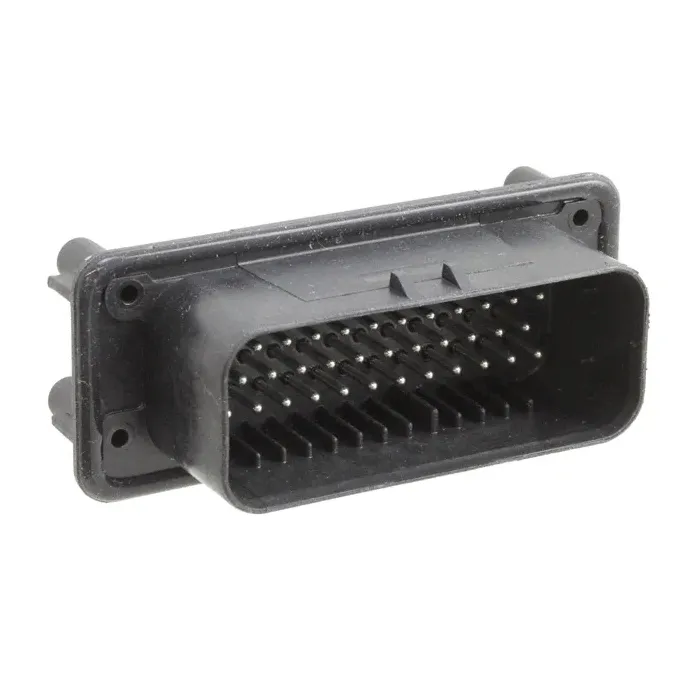
Mechanical stability is another important grounding requirement. High voltage automotive connectors are often subjected to vibrations, shocks, and temperature variations during vehicle operation. The connectors must be designed to maintain a reliable electrical connection under these harsh conditions. This requires robust mechanical designs, such as proper locking mechanisms and strain relief features. For example, the AMPSEAL 35pin 4.0mm Pitch Header Vertical is designed with a secure locking system to ensure a stable connection, which is essential for maintaining proper grounding.
Low Impedance Path
A low impedance grounding path is necessary to effectively divert fault currents to the ground. The grounding path should have a low resistance and inductance to minimize the time it takes for the fault current to be dissipated. This can be achieved by using short and thick grounding conductors. In the design of high voltage automotive connectors, the grounding pins or terminals should be sized appropriately to provide a low impedance path. The AMPSEAL 35pin 4.0mm Pitch Header Right Angled is engineered to ensure that the grounding path has low impedance, enhancing the safety and performance of the high voltage system.
EMI Shielding
High voltage automotive connectors should also provide effective EMI shielding. EMI can be generated by high voltage circuits and can interfere with the operation of other electronic components in the vehicle. The connectors can be designed with shielding materials, such as metal enclosures or conductive coatings, to reduce the emission of electromagnetic fields. The grounding of the shielding is crucial to ensure its effectiveness. The shielding should be connected to the vehicle's ground system to provide a path for the induced currents to flow. The AMPSEAL 14pin 4.0mm Pitch Housing Wire Type incorporates EMI shielding features and proper grounding design to minimize electromagnetic interference.
Environmental Protection
High voltage automotive connectors are exposed to various environmental conditions, such as moisture, dust, and chemicals. These environmental factors can affect the grounding performance of the connectors. The connectors should be designed with appropriate environmental protection features, such as seals and gaskets, to prevent the ingress of moisture and contaminants. Moisture can cause corrosion of the connector contacts, increasing the contact resistance and degrading the grounding. By providing a sealed environment, the connectors can maintain a reliable grounding connection over the vehicle's lifespan.

Industry Standards and Regulations
The automotive industry has established a number of standards and regulations regarding the grounding requirements for high voltage automotive connectors. These standards ensure the safety and performance of high voltage systems in vehicles. For example, standards such as ISO 6469 and SAE J2929 provide guidelines on the design, testing, and installation of high voltage electrical systems in electric and hybrid vehicles. Compliance with these standards is essential for automotive manufacturers and suppliers to ensure the quality and reliability of their products.
Testing and Validation
To ensure that high voltage automotive connectors meet the grounding requirements, comprehensive testing and validation processes are necessary. These tests include electrical conductivity tests, mechanical durability tests, and EMI shielding effectiveness tests. Electrical conductivity tests measure the resistance of the grounding path to ensure that it meets the specified requirements. Mechanical durability tests simulate the vibrations and shocks that the connectors may experience during vehicle operation to verify the mechanical stability of the grounding connection. EMI shielding effectiveness tests measure the ability of the connector to reduce electromagnetic emissions.
Our Role as a High Voltage Automotive Connector Supplier
As a supplier of high voltage automotive connectors, we are committed to meeting and exceeding the grounding requirements. Our engineering team uses advanced design and manufacturing techniques to ensure that our connectors have excellent electrical conductivity, mechanical stability, low impedance grounding paths, effective EMI shielding, and environmental protection. We conduct rigorous testing and validation on all our products to ensure their quality and reliability.
We understand that each automotive application may have unique grounding requirements. Therefore, we offer customized solutions to meet the specific needs of our customers. Whether it is a new electric vehicle model or a retrofit project, we can work closely with our customers to develop high voltage connectors that are optimized for their grounding requirements.
Contact Us for Procurement and洽谈
If you are in the market for high voltage automotive connectors that meet the highest grounding requirements, we invite you to contact us. Our sales team is ready to provide you with detailed product information, technical support, and pricing. We look forward to working with you to ensure the success of your automotive projects.
References
- ISO 6469 - Electrically propelled road vehicles -- Safety specifications for electric energy storage.
- SAE J2929 - Electric and Hybrid Electric Vehicle High - Voltage System Safety Standard.
- "Automotive Electrical and Electronic Systems" by Thomas G. Fisher.