

Hey there! As a supplier of box headers, I've seen firsthand how these small components can have a huge impact on the overall structure of a project. In this blog post, I'm gonna break down exactly how a box header affects the overall structure and why it's such an important part of any design.
First off, let's talk about what a box header is. A box header is a type of electrical connector that's commonly used in printed circuit boards (PCBs). It consists of a plastic housing with rows of metal pins that are designed to mate with corresponding sockets or connectors. Box headers come in a variety of sizes, shapes, and configurations, depending on the specific application.
One of the key ways that a box header affects the overall structure is by providing a reliable and secure connection between different components of a PCB. When you're designing a PCB, you need to make sure that all of the components are properly connected and that the electrical signals can flow smoothly between them. A box header helps to ensure this by providing a stable and consistent connection point.
For example, let's say you're designing a PCB for a new electronic device. You have a microcontroller that needs to be connected to a number of other components, such as sensors, displays, and memory modules. By using a box header, you can easily connect these components to the microcontroller and ensure that they all work together seamlessly.
Another important aspect of a box header is its physical design. The shape and size of a box header can have a significant impact on the overall layout and structure of a PCB. For instance, a double-row box header takes up more space on the PCB than a single-row box header, but it also allows for more connections.
Let's take a look at some specific types of box headers and how they can affect the overall structure.
1.27mm Box Header Double Row Straight
The 1.27mm Box Header Double Row Straight is a popular choice for many PCB designs. This type of box header has two rows of pins that are arranged in a straight line. It's great for applications where you need to make multiple connections in a relatively small space.
The double-row design allows for a higher density of connections, which means you can fit more components onto the PCB. This can be especially useful in compact electronic devices where space is at a premium. The straight design also makes it easy to align and mount the box header on the PCB, which helps to ensure a proper connection.
1.27mm Box Header Double Row SMT
The 1.27mm Box Header Double Row SMT is a surface-mount technology (SMT) version of the double-row box header. SMT components are designed to be soldered directly onto the surface of the PCB, which makes them ideal for high-volume production.
This type of box header offers several advantages in terms of the overall structure. Since it's a surface-mount component, it doesn't require holes to be drilled in the PCB, which can save time and money during the manufacturing process. It also has a lower profile than through-hole components, which can help to reduce the overall height of the PCB.
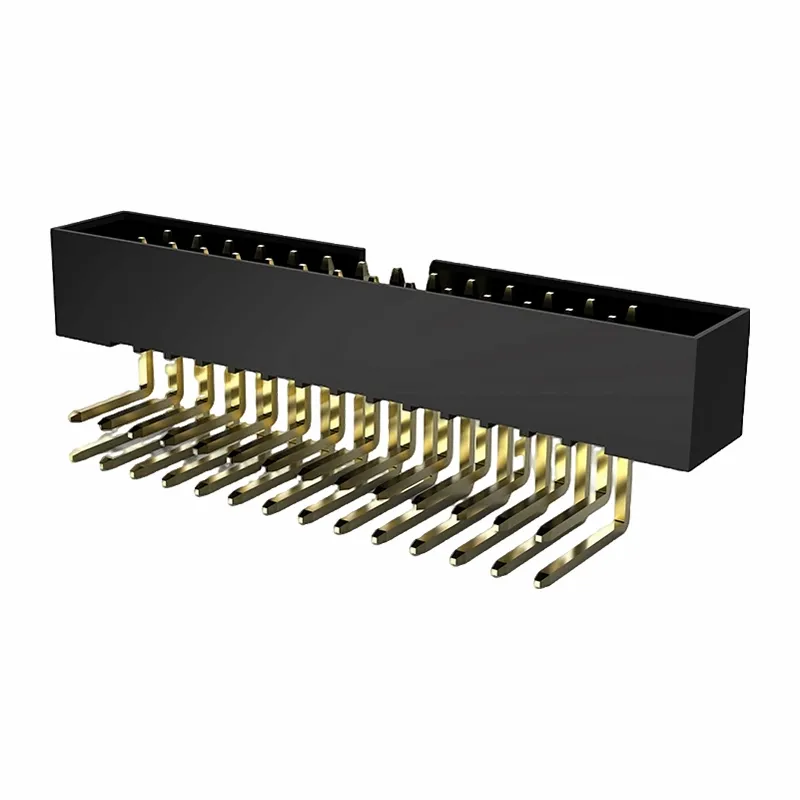
1.27mm Box Header Double Row Right Angle DIP
The 1.27mm Box Header Double Row Right Angle DIP is a through-hole component that has a right-angle design. This means that the pins are oriented at a 90-degree angle to the base of the box header.
The right-angle design can be very useful in applications where you need to make connections in a tight space or where the orientation of the components is important. For example, if you're designing a PCB that needs to fit into a small enclosure, a right-angle box header can help you to make the most of the available space.

In addition to providing a reliable connection and affecting the physical layout, a box header can also impact the electrical performance of a PCB. The quality of the pins and the housing material can affect the conductivity and signal integrity of the connections.
When you're choosing a box header for your project, it's important to consider factors such as the pin material, the plating, and the insulation resistance. High-quality materials and proper plating can help to reduce resistance and ensure that the electrical signals are transmitted accurately.
Moreover, the way a box header is installed on the PCB can also affect the overall structure. If the box header is not properly aligned or soldered, it can lead to connection issues and even damage to the PCB. That's why it's crucial to follow the manufacturer's guidelines when installing box headers.
So, as you can see, a box header plays a vital role in the overall structure of a PCB. Whether it's providing a secure connection, influencing the physical layout, or affecting the electrical performance, it's an essential component that shouldn't be overlooked.
If you're in the market for high-quality box headers for your next project, I'd love to have a chat with you. I can help you choose the right type of box header based on your specific requirements and ensure that you get the best possible product. Don't hesitate to reach out and start a conversation about your procurement needs.
References
- "Electrical Connector Handbook" by Alan Bateman
- "Printed Circuit Board Design and Manufacturing" by John Coonrod