

In the rapidly evolving landscape of electric vehicles (EVs), charging speed has emerged as a pivotal factor influencing consumer adoption and market competitiveness. High voltage automotive connectors play a crucial role in determining the efficiency and speed of the charging process. As a leading supplier of high voltage automotive connectors, we understand the intricate relationship between these connectors and the vehicle's charging speed. In this blog, we will delve into the various aspects of how high voltage automotive connectors affect the charging speed of vehicles.
Understanding High Voltage Automotive Connectors
High voltage automotive connectors are designed to handle the high electrical currents and voltages required for fast charging of electric vehicles. These connectors are engineered to ensure a secure and reliable connection between the charging infrastructure and the vehicle's battery system. They are typically made of high-quality materials that can withstand the high temperatures and mechanical stresses associated with high-power charging.
One of the key features of high voltage automotive connectors is their ability to minimize electrical resistance. Resistance in a connector can lead to power losses in the form of heat, which not only reduces the efficiency of the charging process but also poses a safety risk. By minimizing resistance, high voltage connectors can ensure that a greater proportion of the electrical energy from the charging source is transferred to the vehicle's battery, thereby increasing the charging speed.
Impact of Connector Design on Charging Speed
The design of high voltage automotive connectors has a significant impact on the charging speed. Connectors with a larger cross-sectional area of the conductive material can carry more electrical current without excessive heating. This is because the resistance of a conductor is inversely proportional to its cross-sectional area, according to Ohm's law. Therefore, connectors with a larger cross-sectional area can support higher charging currents, which in turn leads to faster charging times.
Another important design aspect is the contact interface between the connector and the charging cable or the vehicle's battery terminal. A good contact interface ensures a low-resistance connection, which is essential for efficient power transfer. Connectors with a well-designed contact interface can minimize the contact resistance, reducing power losses and improving the charging speed.
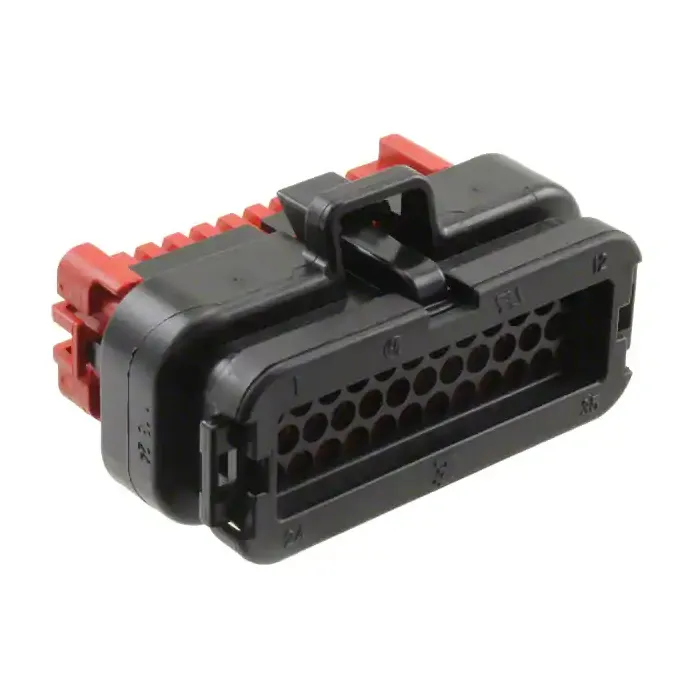
For example, our AMPSEAL 23pin 4.0mm Pitch Header Vertical is designed with a precise contact interface that ensures a reliable and low-resistance connection. The 4.0mm pitch design allows for a compact yet efficient layout, enabling it to handle high currents without compromising on safety or performance.
Thermal Management and Charging Speed
Thermal management is a critical factor in high voltage automotive connectors, especially when it comes to fast charging. As the charging current increases, so does the heat generated in the connector. Excessive heat can damage the connector and reduce its lifespan, as well as pose a safety hazard. Therefore, effective thermal management is essential to maintain the integrity of the connector and ensure optimal charging speed.
High voltage connectors are often equipped with heat dissipation features such as cooling fins or thermal insulation materials. These features help to dissipate the heat generated during the charging process, keeping the connector within a safe operating temperature range. By preventing overheating, the connector can continue to operate at its maximum efficiency, allowing for faster charging.
Our AMPSEAL Terminal is designed with advanced thermal management features. The terminal is made of a high-conductivity material that can efficiently transfer heat away from the contact points. Additionally, the design of the terminal allows for good air circulation, further enhancing the heat dissipation process.
Connector Compatibility and Charging Speed
Compatibility between the high voltage automotive connector and the charging infrastructure is also crucial for achieving optimal charging speed. Different charging standards and protocols exist in the market, and connectors need to be designed to be compatible with these standards. Incompatible connectors may not be able to establish a proper connection or may not support the required charging currents, resulting in slower charging times.
For example, some high-power charging stations are designed to support specific connector types and charging protocols. If a vehicle's connector is not compatible with these stations, it may only be able to charge at a lower power level, significantly increasing the charging time. Therefore, it is important for vehicle manufacturers and charging infrastructure providers to ensure that their connectors are compatible with the latest charging standards.
Our AMPSEAL 14pin 4.0mm Pitch Housing Wire Type is designed to be compatible with a wide range of charging standards and protocols. This ensures that vehicles equipped with our connectors can take full advantage of the available charging infrastructure, achieving faster charging speeds wherever they go.
Safety and Charging Speed
Safety is of utmost importance in high voltage automotive connectors. A safe connector not only protects the vehicle and its occupants but also ensures the reliability and efficiency of the charging process. High voltage connectors are designed with multiple safety features to prevent electrical short circuits, overheating, and other potential hazards.
For example, connectors may be equipped with insulation materials to prevent electrical leakage and protect against electric shock. They may also have built-in fuses or circuit breakers to cut off the power in case of an overcurrent situation. By ensuring safety, these features allow for higher charging currents to be used, which can significantly increase the charging speed.

Future Trends in High Voltage Automotive Connectors
As the demand for faster charging speeds continues to grow, the high voltage automotive connector industry is constantly evolving. Future connectors are expected to be even more efficient, compact, and reliable. Advancements in materials science and manufacturing technologies are likely to lead to the development of connectors with even lower resistance and better thermal management capabilities.
One of the emerging trends is the use of wireless charging technology. While wireless charging is still in its early stages of development, it has the potential to revolutionize the way we charge electric vehicles. High voltage connectors may play a role in the development of wireless charging systems, providing a reliable and efficient connection between the vehicle and the charging pad.
Conclusion
High voltage automotive connectors have a profound impact on the vehicle's charging speed. Through their design, thermal management capabilities, compatibility, and safety features, these connectors can ensure efficient and fast charging of electric vehicles. As a leading supplier of high voltage automotive connectors, we are committed to providing our customers with the latest and most advanced connector solutions.
If you are interested in learning more about our high voltage automotive connectors or would like to discuss your specific requirements, we encourage you to contact us for a procurement discussion. Our team of experts is ready to assist you in finding the right connector solution for your needs.
References
- Ehsani, M., Gao, Y., & Emadi, A. (2018). Modern Electric, Hybrid Electric, and Fuel Cell Vehicles: Fundamentals, Theory, and Design. CRC Press.
- Chan, C. C. (2007). The state of the art of electric, hybrid, and fuel cell vehicles. Proceedings of the IEEE, 95(4), 704-718.
- International Electrotechnical Commission (IEC). (2018). IEC 62196-1:2018 - Plugs, socket-outlets, vehicle connectors and vehicle inlets - Conductive charging of electric vehicles - Part 1: General requirements.